Orders & Fulfillment
What happens after the sale: how orders flow from your store through production to your customer's door, and your job at each stage.
The first sale notification is the best moment in POD. Here's everything that happens after it — most of it automatic, with a few points where your attention matters.
The order lifecycle
- Customer buys on your store (Etsy, Shopify, WooCommerce).
- The order syncs into PODMACH — appearing in your Orders view with its channel, products, and financials.
- Production kicks off with your print provider — the item is printed, quality-checked, and packed. Typical POD production runs 2–5 business days before shipping.
- Shipping — the provider ships direct to your customer with tracking, which flows back to the sales channel so your buyer gets the platform's own shipping notifications.
- Delivery. Your customer has no idea a print provider exists — the package is, to them, from your shop.
Your Orders view
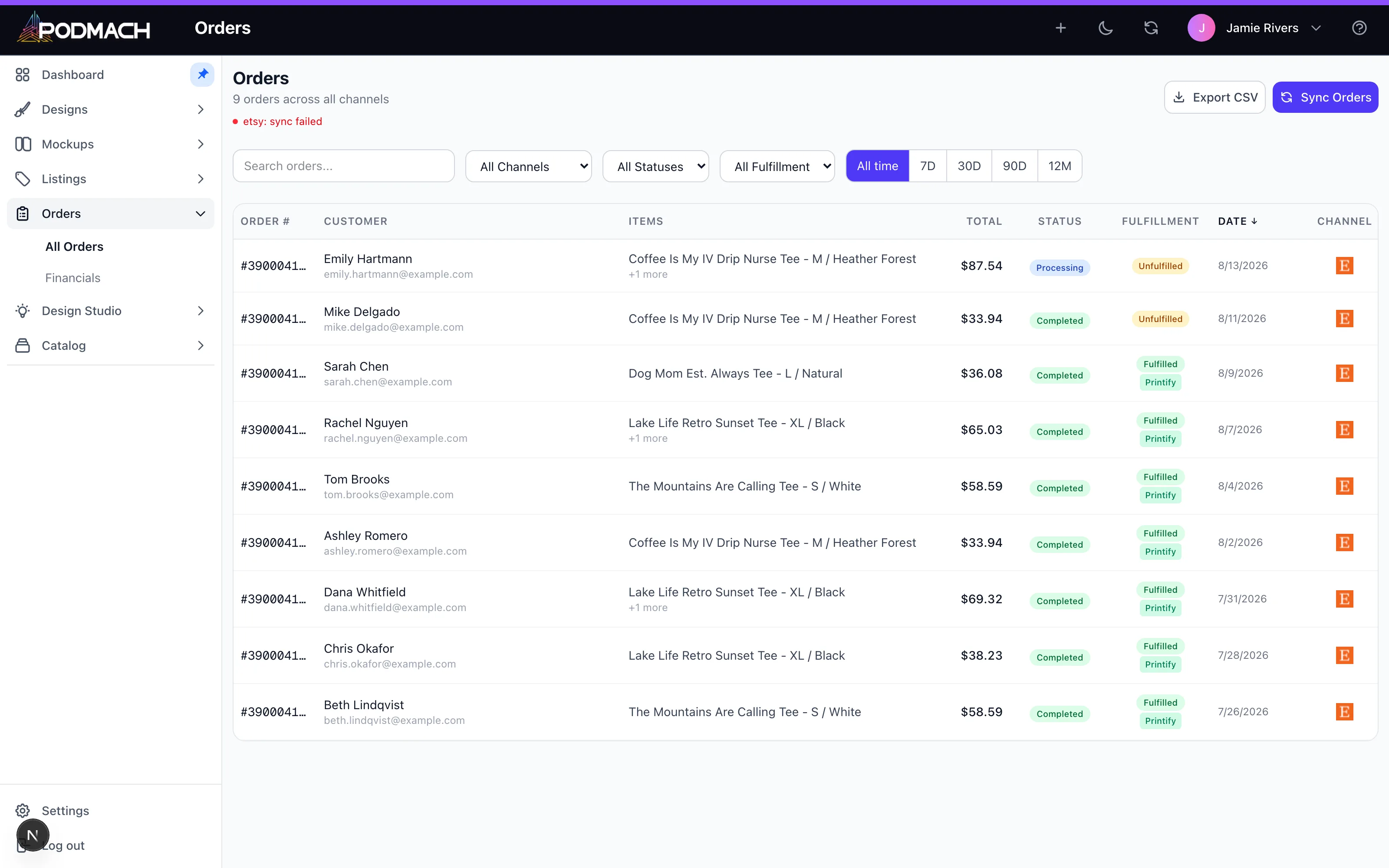
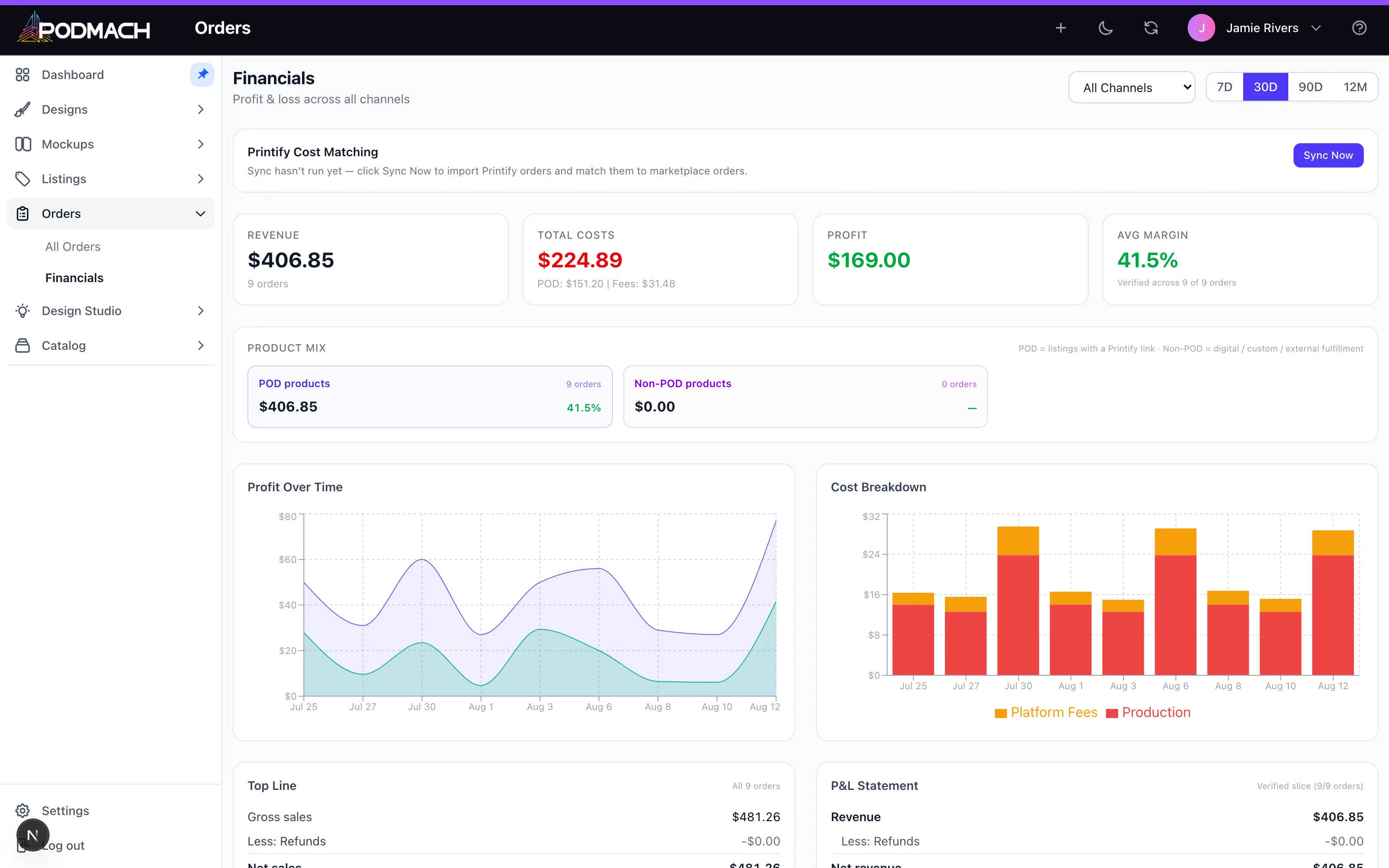
Orders in PODMACH is the cross-channel stream — every sale from every connected store in one place, with drill-down into each order's items, status, and money. The Financials view turns that stream into the numbers that matter: revenue, costs, fees, and realized margin per order and over time. This is where Pricing for Profit's monthly margin review happens.
Where your attention matters
Watch for stuck orders. The overwhelming majority flow through untouched. The exceptions — an out-of-stock variant at the provider, a print-file issue, an address problem — need you to notice. Make a quick pass of your orders view part of your routine; anything unshipped past the provider's normal production window deserves a look.
Customer messages are yours. Fulfillment is automated; customer service is you. "Where's my order?" answers come from the tracking on the order. Respond fast — marketplace metrics count it, and reviews reflect it.
Returns and reprints. POD items are made-to-order, so returns work differently than retail. For defective or damaged items, print providers typically reprint or refund — photograph-and-report through the provider. For buyer's-remorse returns, set a clear shop policy and stick to it; many POD sellers offer replacements for defects but not returns for sizing, with a prominent size chart doing the prevention.
Setting delivery expectations
The one thing that most protects your reviews: honest delivery windows before purchase. Production time + shipping time, stated in the listing. Under-promise by a day or two — packages that arrive "early" earn five stars; identical packages that arrive one day "late" earn threes.
Holiday reality
Q4 stretches every provider's production times. Watch their announced holiday deadlines and adjust your stated windows early — the full playbook is in the Holiday Season Prep Checklist.