Pricing for Profit
The full margin math — base costs, platform fees, shipping — and the pricing strategies that keep every variant profitable.
More POD shops die from quiet margin erosion than from lack of sales. The listing looked profitable; the fees, the 2XL upcharge, and the "free shipping" promise ate it. Here's the complete math and the strategies built on it.
The real cost stack (Etsy example)
For a $24.99 tee:
| Line | Amount |
|---|---|
| Sale price | $24.99 |
| Print provider base cost (M, one color) | −$10.50 |
| Etsy transaction fee (6.5%) | −$1.62 |
| Payment processing (3% + $0.25) | −$1.00 |
| Listing fee | −$0.20 |
| Offsite ads, if applicable (12–15%) | −$3.00–3.75 |
| Margin (no offsite ad) | ≈ $11.67 |
| Margin (offsite-ad sale) | ≈ $7.92–8.67 |
Notes that bite: if you offer free shipping, the provider's shipping charge (often $4–5 domestic) comes out of that margin too. And Etsy's transaction fee applies to shipping charged to buyers as well.
Every platform's stack differs — Shopify swaps marketplace fees for your subscription + payment processing; WooCommerce for hosting + processing. PODMACH's order financials show you the realized numbers per channel, which beats any spreadsheet estimate. The profit calculator on podmach.com is built for exactly this modeling.
Rule 1: price from the worst variant
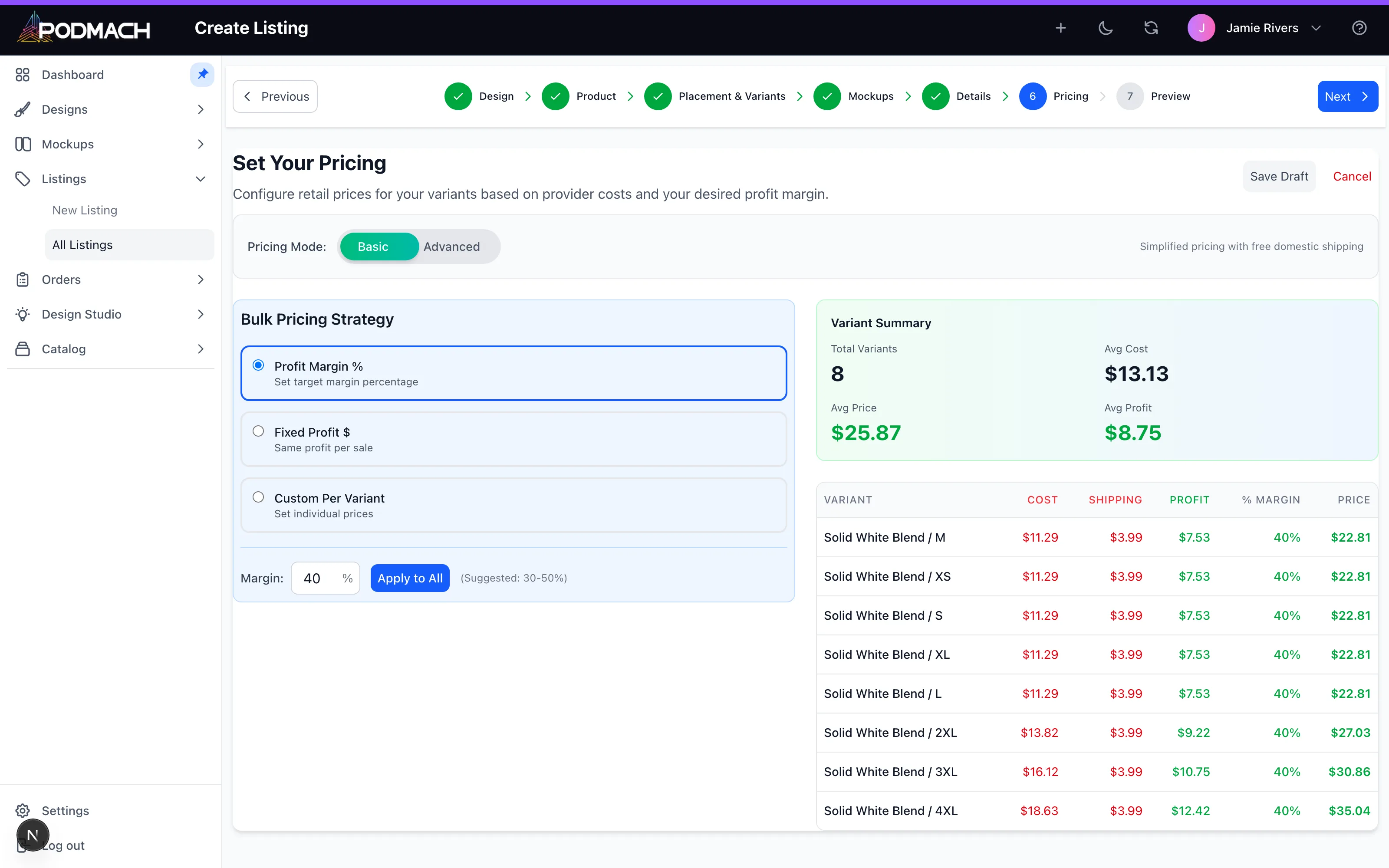
Base cost isn't one number. The 2XL/3XL upcharge is commonly $2–4 over the Small. If you price everything off the Small's cost, your large sizes — often a third of apparel sales — quietly earn a fraction of what you think.
Two valid answers: per-size pricing (where the platform supports it cleanly), or one price set high enough that the worst-case variant still clears your minimum margin. Pick one deliberately.
Rule 2: set a floor, then price to the market
Decide your minimum acceptable margin per unit — for many sellers, $6–8 on a tee. That's your floor; the market sets your ceiling. Search your niche and note the price band of listings that are actually selling (review counts tell you). Price within the band, at or above the middle. Competing on price in POD is a race to the base cost.
Rule 3: raise prices on winners
The counterintuitive one. When a listing is selling steadily, test +$2. Sales usually don't blink — buyers of niche designs are buying the design, not comparison shopping — and the increase is pure margin. Your bestsellers are almost always underpriced.
Free shipping: promotion, not policy
"Free shipping" converts, but it's just shipping cost relocated into your price. $24.99 + $4.99 shipping and $29.99 free-shipped are the same money — the second usually converts better and feeds marketplace algorithms that favor free shipping. Do the relocation explicitly; the sellers who get hurt are the ones who flip on free shipping without repricing.
Sales and coupons
Marketplace buyers expect sales; build the headroom in. If you plan to run 20%-off promotions, your everyday price needs margin at −20%. Design the discount in from the start rather than discovering your sale price is your break-even.
The habit
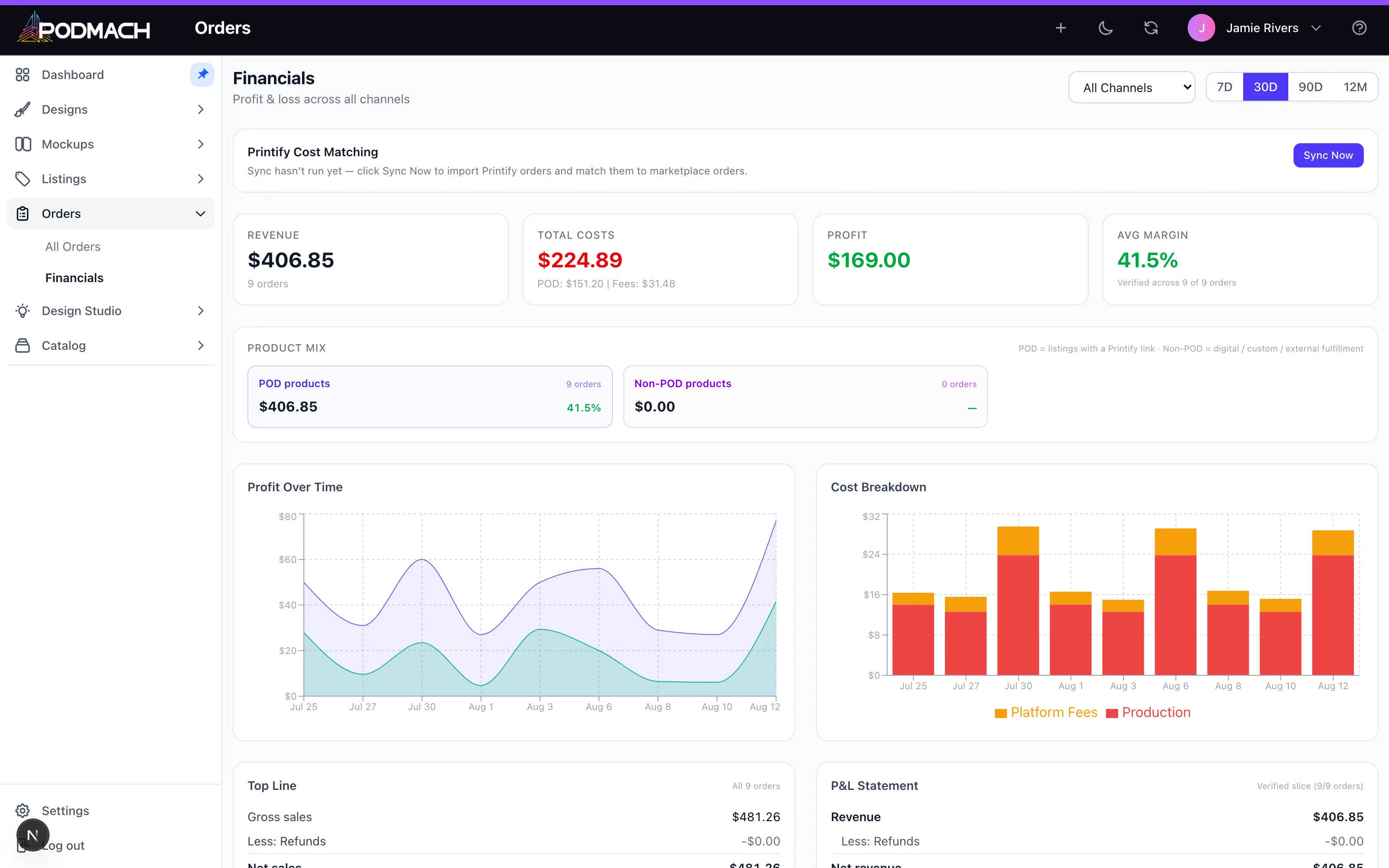
Once a month, open your order financials in PODMACH, sort by margin, and look at the bottom ten. Reprice, restructure, or retire them. An hour a month keeps the quiet erosion out.
Continue the Growing Your Business path
Etsy SEO in 2026
8 min read