Etsy SEO in 2026
How Etsy search actually ranks listings, and the title/tag/attribute playbook for getting found — written for POD sellers.
Etsy search is your free traffic engine, and it runs on two questions: is this listing relevant to the query? and is it likely to make the searcher happy? Everything in Etsy SEO feeds one of those two.
Etsy describes its own search in two phases in the Seller Handbook: query matching (which listings are eligible for a search) and ranking (what order those eligible listings appear in). This guide follows that split, then walks through a complete POD listing, the mistakes that quietly cost sellers traffic, and a routine for keeping listings tuned.
How does Etsy search rank listings?
- Query matching — your title, tags, categories, and attributes determine which searches you can appear in at all. Etsy says it also looks at descriptions, the first photo, and reviews when matching.
- Listing quality score — Etsy watches how your listing performs when shown: clicks, favorites, purchases. Listings that convert get shown more. This compounds — early sales beget rank begets sales.
- Shop-level signals — reviews, completed profile, customer service record. Etsy names three customer-service inputs specifically: average review rating, message response rate, and case rate over the past three months.
- Recency — new and renewed listings get a temporary visibility bump while Etsy gathers data on them. Etsy says this lasts from a few hours to a few days, and that renewing listings just to chase it isn't an effective strategy.
- Shipping price — for US sellers, Etsy says it considers shipping price as a ranking factor. High shipping charges can cost you placement as well as conversions.
- Personalization — Etsy's Context Specific Ranking tailors results to each shopper's habits, so two people typing the same query can see different orders.
You control query matching directly; you influence quality score through mockups, price, and reviews.
Two things that don't move organic rank, per Etsy: running Etsy Ads (ads appear in their own designated slots), and subscribing to Etsy Plus. Star Seller status doesn't directly change ordering either, though Etsy notes it can lift conversion as a trust signal.
How should you write an Etsy title?
- Front-load the primary phrase. Etsy states that where a phrase sits in your title doesn't affect ranking, but the first few words are what shoppers see first, especially on mobile and in tight search layouts. Lead with what the item is: "Funny Nurse Shirt, ER Nurse Gift, Coffee Lover Nurse Tee" — not "The Caffeinated Caregiver™ Premium Tee."
- Add 1–3 related phrases, comma-separated, most-searched first. Readable beats stuffed — a human still has to want to click it. Etsy's own guidance warns that long lists of keywords in a title can confuse buyers and turn them away.
- Match buyer vocabulary, not yours. Buyers type "shirt" more than "tee," "gift for mom" more than "maternal appreciation apparel."
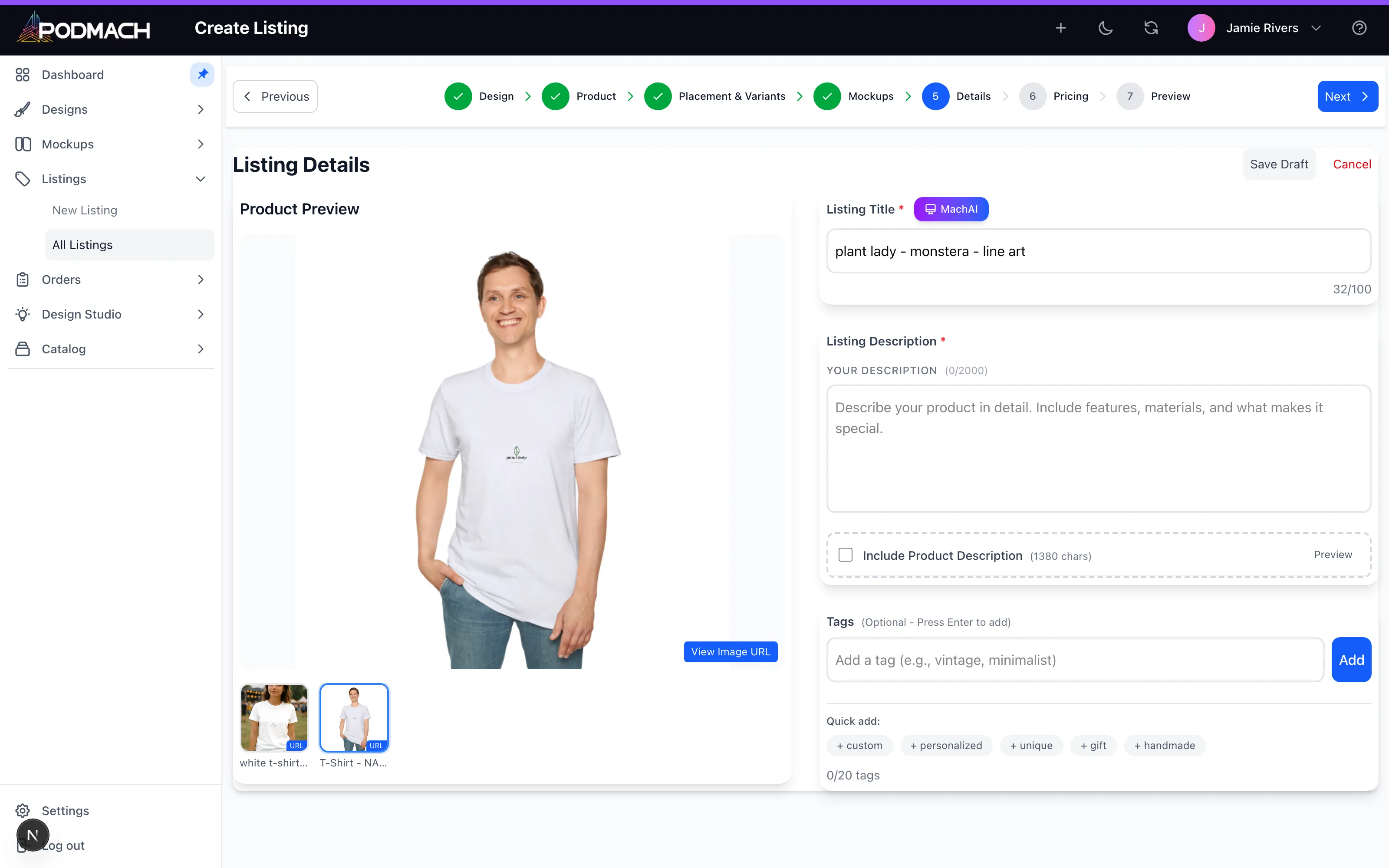
A quick test: read the title aloud. If it sounds like a sentence a shop owner would write, it's fine. If it sounds like a list of search terms, cut it back. You don't lose matching coverage by trimming the title, because your tags and attributes carry the rest.
How many tags should an Etsy listing have?
All thirteen, always. Each tag can be up to 20 characters, and every empty slot is a search you can't match.
- Multi-word phrases, not single words — "camping gift for dad" over "camping" + "gift" + "dad." Phrases match phrase searches, which are lower-competition and higher-intent. Etsy calls these long-tail keywords: searched less often than broad terms, but they tend to convert better because they describe exactly what a shopper wants.
- Don't repeat your title verbatim across all tags; expand coverage — occasions ("nurse graduation gift"), recipients ("gift for coworker"), styles ("retro camping shirt"), adjacent phrasings.
- Don't spend tags on your category or attributes. Etsy treats categories and attributes like tags. If your listing is already in the T-shirts category, a standalone "t shirt" tag is wasted. Fold the term into a longer phrase instead ("retro nurse tee").
- Skip plurals and misspellings. Etsy matches on root words ("diary" matches "diaries") and redirects common typos, so neither needs its own tag.
- Split long phrases. If the phrase you want is over 20 characters ("funny night shift nurse gift"), cover it with two shorter phrases that share the words ("night shift nurse" + "funny nurse gift").
- Seasonal rotation: swap a few tags per listing toward gift terms in Q4 ("stocking stuffer," "secret santa gift") and events through the year (Mother's Day, graduation). The Holiday Season Prep Checklist covers timing.
MACH AI drafts full tag sets — audit them against these rules and inject your niche's live vocabulary. (See MACH AI: Listing Copy at Speed.)
Attributes and categories
Fill in everything — color, occasion, holiday, recipient. Attributes act as search filters; empty attributes silently exclude you when buyers filter. Choose the most specific category available: Etsy says a listing in a specific subcategory is also included in every parent category above it, so specificity costs you nothing.
Add every attribute value that's accurate, even the less precise ones. Etsy's example: if you'd call a color "magenta" but "pink" is also true, add pink as the color attribute. For a heather-gray tee with a pink design, set the primary and secondary colors both. Then describe it in your own words in the title, tags, and description.
One caution on occasion attributes: Etsy intends them for items made for that occasion. A Christmas design gets the Christmas holiday attribute. An everyday nurse shirt that makes a good Christmas gift gets a "stocking stuffer" tag, not the holiday attribute.
Descriptions
Etsy search reads descriptions, so include your key phrases naturally, especially in the opening lines — which are also what previews show, so the first sentence has to sell as well as rank. Then inform: materials, sizing, care, production time.
Etsy advises against pasting your title as the first line or listing raw keywords. Write one or two human sentences that use your top phrases, then the facts. For POD apparel, the facts that prevent messages and returns are fit (unisex vs. fitted), fabric, a size chart, care instructions, and an honest production-plus-shipping estimate.
Worked example: one POD listing, start to finish
Say you're listing a coffee-themed nurse design on a unisex tee.
Title: "Funny Nurse Shirt, Coffee Lover ER Nurse Gift, Night Shift Nurse Tee"
It leads with what the item is, adds two related phrases a buyer might search, and still reads naturally.
Tags (13, each 20 characters or fewer):
| # | Tag | Covers |
|---|---|---|
| 1 | funny nurse shirt | core product |
| 2 | er nurse gift | specialty + gift |
| 3 | nurse coffee tee | design theme |
| 4 | nursing school grad | occasion |
| 5 | gift for nurse | recipient |
| 6 | nurse week gift | occasion |
| 7 | night shift nurse | identity |
| 8 | caffeine nurse | design theme |
| 9 | rn shirt women | specialty + buyer |
| 10 | coffee lover gift | adjacent audience |
| 11 | hospital coworker | recipient |
| 12 | new nurse gift | occasion |
| 13 | retro nurse tee | style |
Notice what's missing: no standalone "shirt" or "t shirt" (the category covers it), no plurals, no tag that repeats the full title.
Attributes: every color that's accurate, occasion and holiday only if the design is made for one, and the most specific apparel subcategory.
Description opening: "A funny nurse shirt for the coffee-powered night shift. Soft unisex tee, printed when you order." Then fit, fabric, size chart, care, and shipping estimate.
Photos: a hero image readable at thumbnail size. See Mockups That Sell.
What actually moves the needle (in order)
- A hero image readable at thumbnail size — rank means nothing if nobody clicks.
- Front-loaded, buyer-vocabulary titles.
- Thirteen phrase tags with seasonal rotation.
- Complete attributes.
- Competitive pricing within your niche's band.
This order is a rule of thumb from how the two phases interact, not an Etsy-published weighting. The logic: the photo drives clicks, clicks and sales drive listing quality, and listing quality decides ranking among everything that matched.
What are the most common Etsy SEO mistakes?
- Leaving tags empty. Thirteen slots, thirteen chances to match. Ten tags means three searches you can't appear in.
- Keyword-stuffed titles. They may match, but they lose the click, and a listing that loses clicks loses rank.
- Renewing listings for the bump. The recency boost is small and short. Renewing costs a listing fee each time; better tags and better photos are a better use of the money.
- Checking rank by searching yourself. Results are personalized, so what you see isn't what buyers see. Use Etsy Stats instead: it shows which search terms actually brought visitors to each listing.
- Ignoring shipping price. For US sellers it's a ranking input. If your shipping charge is out of line with similar listings, consider folding it into the price. Pricing for Profit shows how to do that without losing margin.
- Copying a competitor's tags wholesale. If you match exactly the same searches as an established shop, you're competing where their reviews and sales history win. Look for phrasings they don't cover.
- Using trademarked terms. Brand names, characters, and celebrity names in titles or tags can get listings removed. Describe the style, not the brand.
How do you keep listings tuned over time?
A light monthly routine works better than an occasional overhaul:
- Open Etsy Stats and note the search terms bringing traffic to your best listings.
- Compare your weakest listings against those winners. Etsy suggests this directly: refresh low-traffic listings' tags with phrases that work elsewhere in your shop.
- Change one thing at a time — tags or title or hero photo — so you can tell what helped.
- Rotate seasonal tags a few weeks before each occasion and swap them back after.
- Look at conversion, not just views. A listing with healthy views and no sales has a photo, price, or description problem, not an SEO problem.
For seasonal swaps across many listings, Etsy's Shop Manager lets you select several listings and add or remove a tag on all of them at once, and its quick-edit view changes titles and tags without opening each listing. Do the refresh in one sitting rather than piecemeal; the Scaling Playbook explains why batching work like this pays off.
The compounding truth
SEO gets your listing seen; conversion gets it ranked. They feed each other, which is why shops feel stuck at zero and then suddenly work: the flywheel needs its first turns. Volume of good listings — each one another lottery ticket with better-than-lottery odds — is how you get those first turns.
Key takeaways
- Etsy search has two phases: matching (titles, tags, categories, attributes, descriptions) and ranking (listing quality, customer service, recency, shipping price, personalization).
- Title position doesn't affect rank, per Etsy, but leading with what the item is still wins the click.
- Use all 13 tags as multi-word phrases of 20 characters or fewer. Don't repeat categories, attributes, plurals, or misspellings.
- Fill every accurate attribute. Empty attributes drop you out of filtered searches.
- Ads, Etsy Plus, and renewing for the recency bump don't improve organic rank. Photos, conversion, and customer service do.
- Check what works in Etsy Stats, not by searching for yourself.
Continue the Growing Your Business path
Orders & Fulfillment
2 min read