Choosing Products from the Catalog
Hundreds of blueprints, a handful that matter for you. How to read the catalog, pick starter products, and expand deliberately.
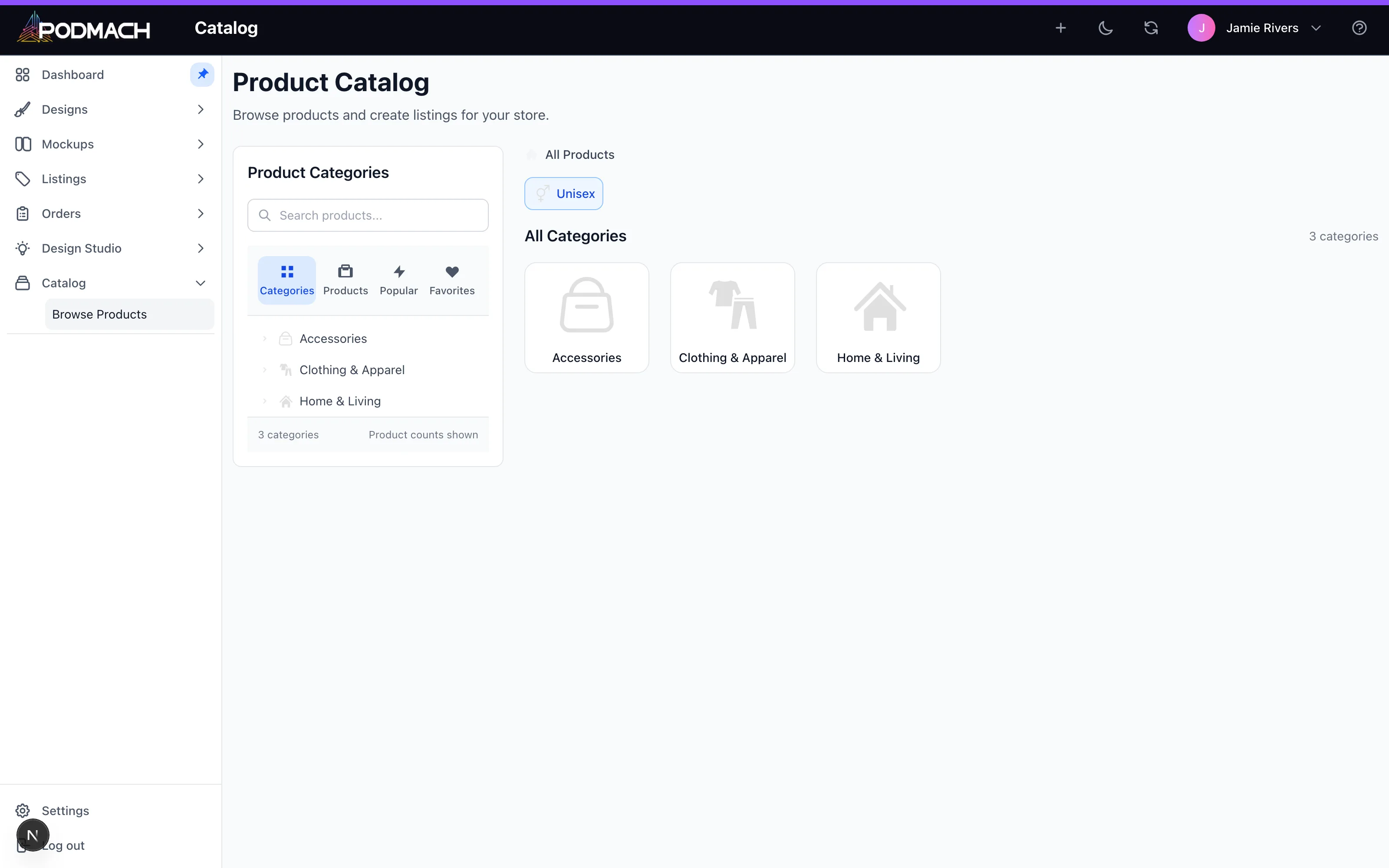
The Printify catalog inside PODMACH is huge — hundreds of blueprints across apparel, drinkware, wall art, accessories, and home goods. Huge catalogs create a specific beginner mistake: listing everything. Here's how to choose deliberately instead.
Reading a catalog entry
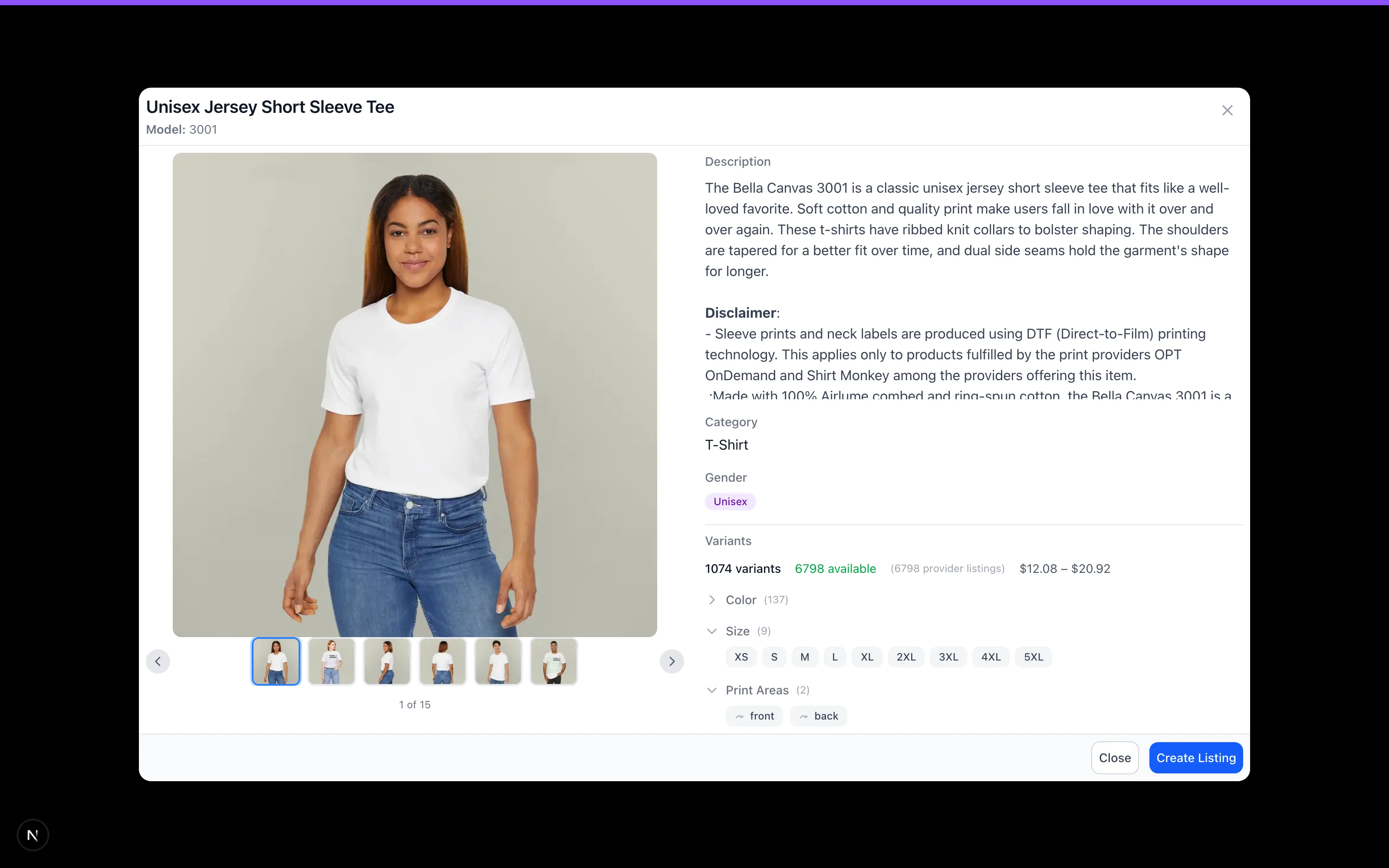
Open any blueprint under Catalog and you're looking at:
- Variants — the sizes and colors offered. More variants = more buyer choice but also more SKUs to think about.
- Print areas — where your design can go (front, back, sleeve, all-over).
- Print providers — who can produce it, each with their own base cost, location, and production time. Same blueprint, meaningfully different economics per provider.
- Base costs per variant — a 2XL costs more to produce than a Small; your pricing needs to know that.
The boring, correct starter lineup
For most niches, the proven starting five:
- Classic unisex tee (e.g., Bella+Canvas 3001) — the workhorse of POD.
- Unisex sweatshirt (e.g., Gildan 18000) — higher price point, great margins in fall and winter.
- 11oz/15oz mug — cheap to buy, easy gift, photographs well.
- Matte poster — where art-forward designs shine.
- Tote bag — steady seller, simple print area.
These five cover gift-buying, self-buying, all seasons, and price points from about $15 to $45 — off one design.
When to expand
Add blueprints when a signal tells you to, not because the catalog is there:
- A design is selling → put it on adjacent products (tee sells → sweatshirt and mug next).
- The calendar says so → ornaments and blankets in Q4, tanks in spring.
- Your niche has a natural product (dog niche → pet bandanas; gym niche → shaker-adjacent drinkware).
Ordering samples
Before a product becomes a pillar of your shop, hold one in your hands. Print quality, fabric feel, color accuracy — one sample order answers what no product page can, and sample photos make mockups your competitors can't fake.
Next: Mockups That Sell — because the product photo, not the product, is what buyers see first.