Multi-Store Management
Running Etsy + Shopify + WooCommerce as one operation: what to centralize, what to differentiate, and the failure modes to avoid.
One store proves the model; multiple stores scale it. Multi-channel is also where sellers drown in operational overhead — unless the operation is genuinely centralized. That's the job PODMACH was built for.
Why multi-channel at all
- Diversification. An Etsy algorithm change, a search rank drop, or a shop review problem can't touch your Shopify revenue. Single-platform sellers are one policy email from zero.
- Different buyers. Etsy brings gift-buyers who search; your own store serves the audience you build and own — email list, social following, repeat customers.
- Same catalog, more surface area. Every proven design earns in more places at no extra design cost.
What to centralize (everything you can)
With PODMACH as the hub:
- One design library feeding every store. Never maintain per-platform design copies.
- One listing workflow. The wizard publishes to each connected channel — the work of listing happens once.
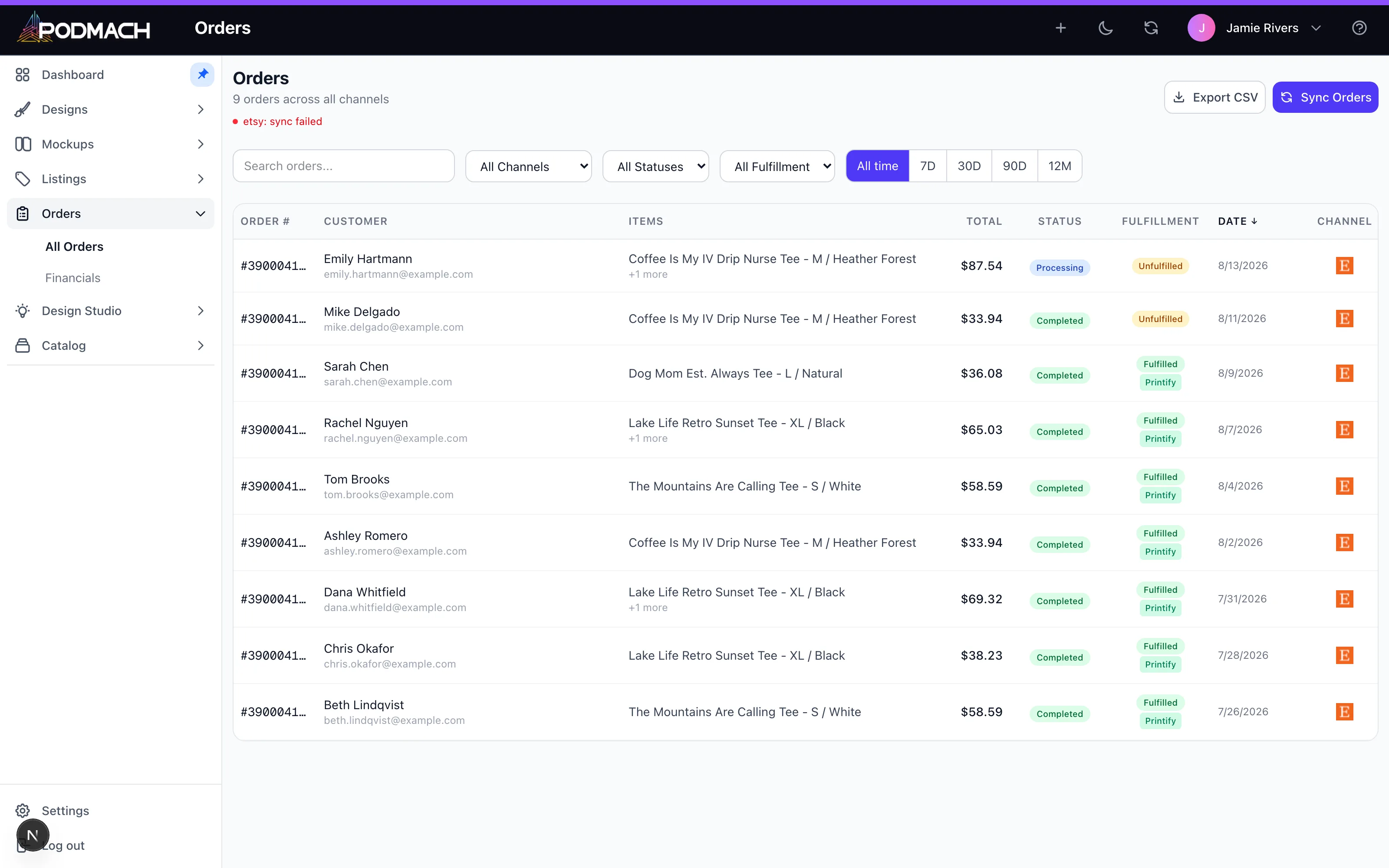
- One order stream. All channels in a single Orders view with per-channel financials — margin comparison across platforms becomes visible instead of vibes. (Etsy's fees vs. Shopify's subscription math genuinely favors different products at different volumes; the financials view settles it with your own data.)
What to differentiate on purpose
Publishing everywhere doesn't mean publishing identically:
- Listing copy. Etsy copy is search-driven (tags, front-loaded titles); your own store's copy can be brand-driven. Adapt at the details step.
- Pricing. Fee structures differ, so identical prices mean different margins per channel. Decide deliberately: uniform prices for simplicity, or per-channel pricing for margin. Either is defensible; drifting into it isn't.
- Catalog depth. Common pattern that works: full catalog on Etsy (search finds the long tail), curated bestsellers on your own store (your traffic deserves your best).
Failure modes to avoid
- Expanding before Etsy works. A second channel doubles surfaces, not sales. Add your own store when you have proven designs and a plan to drive traffic to it — Shopify with no traffic plan is a monthly bill, not a channel.
- Uneven housekeeping. Retire a bad design everywhere, not just where you noticed it. The centralized listings view exists so channels can't quietly diverge.
- Ignoring per-channel signals. What sells on Etsy and what sells to your Instagram audience will differ. Read the financials per channel and let each channel's data shape its catalog.
The cadence that scales
Weekly: one pass over the combined order stream and any stuck orders. Monthly: per-channel margin review (bottom ten listings — reprice or retire), and one deliberate catalog action per channel. Multi-store selling stays light exactly as long as the routine stays centralized.
Continue the Scaling Up path
Holiday Season Prep Checklist
6 min read